Author: Sungim Joun
Introducing the Korean Grass and Straw Craft Museum
The Korean Grass and Straw Craft Museum is a private museum dedicated to collecting, researching, and exhibiting the culture of Korean grass and straw crafts and traditional ways of life. In Korea’s agrarian society, straw and grasses were easily accessible materials widely used in everyday life, including food, clothing, and shelter. The techniques of weaving and binding these materials embody the wisdom of Korean life, traditional philosophy, and folk beliefs.
Today, the museum houses approximately 2,200 artifacts, including household items, farming tools, and folk materials, and promotes Korean grass and straw culture through
exhibitions and educational programs.
Korean Basketry Culture
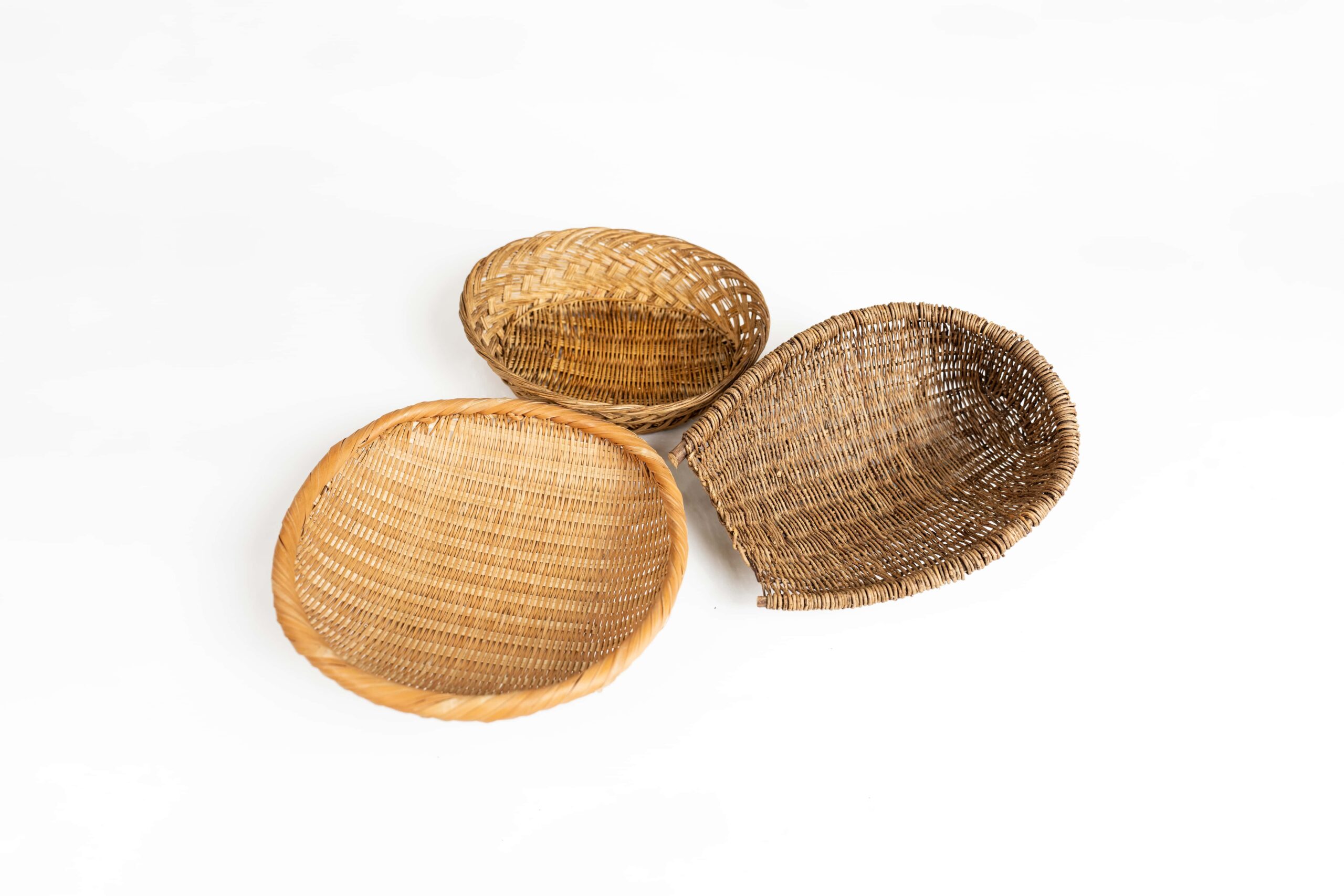
In Korea, grasses and straws used to make baskets, mats, shoes, and brooms were regarded as important natural resources for daily life. In particular, rice straw was considered sacred and was used in communal rituals such as Geumjul (sacred straw ropes) and Ddibae (straw boats). This shows that grass and straw crafts were connected not only to practical life but also to the spiritual culture of communities. Depending on the region, people used various plants such as sedge, cattails, bamboo, and bush clover to create everyday craft objects including Chaesang (bamboo cases), Wang’golhap (sedge boxes), Jiseung baskets made of twisted Hanji paper, Dunggumi, Gwangjuri, and Sokuri baskets. Using materials gathered from nature, people maintained a self-sufficient lifestyle, and these basketry traditions reflected both human labor and environmentally sustainable values. In the 1990s, Sungim Joun realized that Korea’s traditional basketry culture was rapidly disappearing. She sought to introduce the eco-friendly values and traditional wisdom embedded in Korean grass and straw crafts to contemporary society.
Working with Community
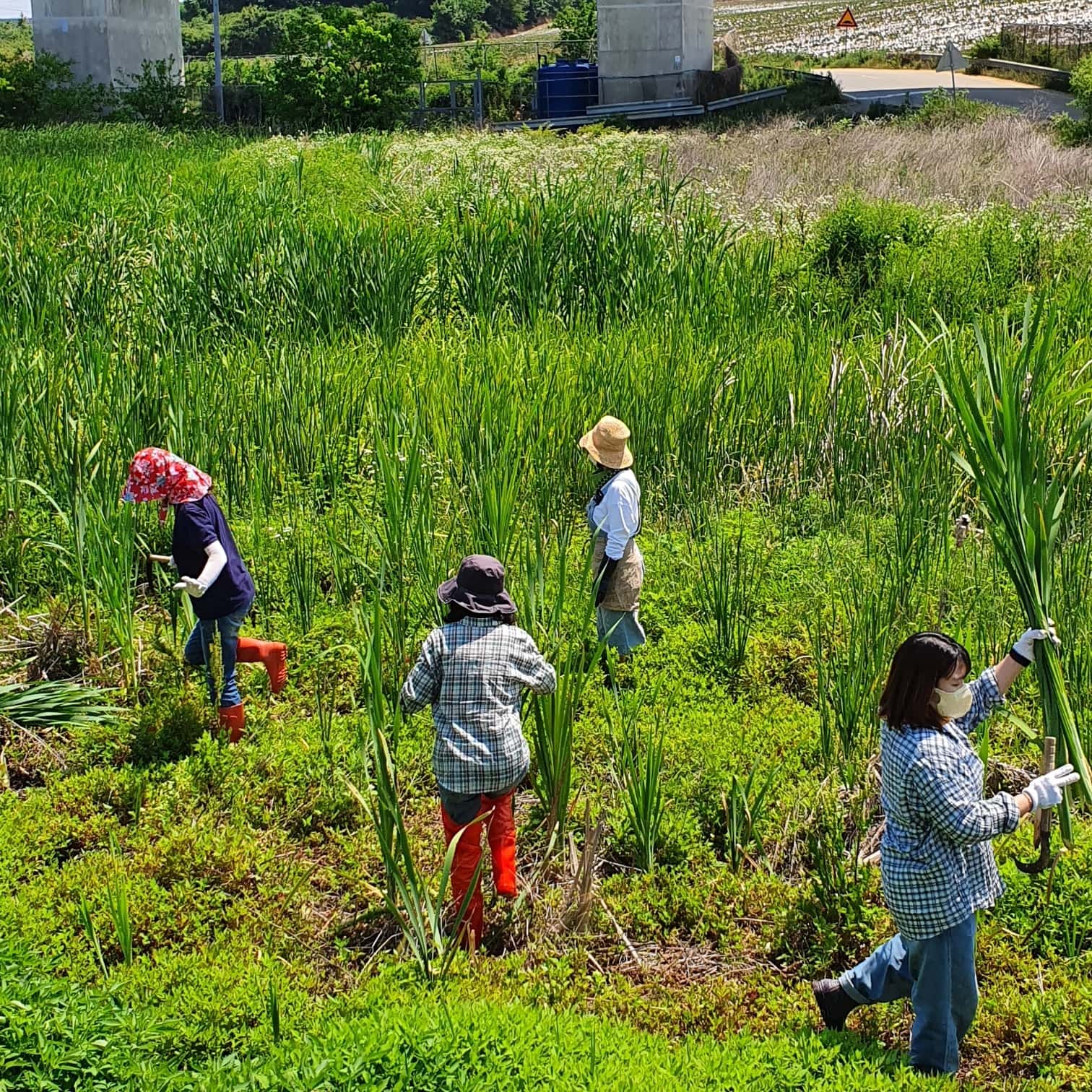
Concerned about the disappearance of Korea’s traditional weaving culture, Sungim Joun traveled throughout the country to meet elderly craftspeople who still preserved traditional weaving techniques and to research the uses of local plants. Based on this research, she established the Korean Grass and Straw Craft Museum in Gyeonggi-do in 2006. Since then, she has promoted Korean basketry culture through exhibitions, education, and creative activities. Since 2021, the museum has operated the “Grass and Straw Craft Cultural Arts Club” working together with local residents to sustain traditional craft culture. Members ranging from their twenties to seventies gather to collect and process natural materials such as rice straw, sedge, and cattails, creating baskets, straw shoes, and other everyday objects. Through these activities, participants reflect on environmentally friendly ways of life and local ecological issues while building meaningful communities. These practices have become a cultural way of restoring the value of handcraft and human connection in modern society.
Weaving for Sustainability
Club members participate for many different reasons, including hobbies, learning traditional skills, or finding meaningful activities after retirement. Despite their different backgrounds, they share a common desire to pursue a more human-centered life connected with nature. People from various fields such as education, interior design, archaeology, and crafts exchange ideas through grass and straw crafts, forming new cultural networks and communities. The museum works closely with members to plan educational programs and exhibitions while providing workshop spaces, materials, and exhibition opportunities. Through these
activities, traditional weaving culture is expanding beyond preservation into a new form of contemporary lifestyle culture, and the museum itself continues to grow as a cultural institution deeply connected to the local community.