Following the launch of HeritageAlive’s publication on basketry as intangible cultural heritage (ICH), we are continuing the conversation through a series of short blogs. These contributions provide NGOs in our ICH NGO Forum network with an opportunity to share practical experiences, lessons learned, and methodologies from their work safeguarding basketry traditions in communities around the world.
Basketry from Nepal: Contemporary designs for traditional Chepang bamboo weaving
Author/s: Pranathi and Nripal Adhikary
Introducing ABARI
ABARI is a Nepal-based research, design, and construction firm co-founded by Nripal Adhikary and Pranathi, dedicated to promoting sustainable, vernacular architecture using natural materials like bamboo and earth. Established in 2006, the firm focuses on building context specific, earthquake-resistant structures using local materials.Their main focus is to blend modern design with vernacular craftsmanship by working with a team of skilled masons,carpenters and weavers.
Chepang basketry culture
Nepal, situated in the lap of the Himalayas, has a huge diversity of bamboo species. This tiny country has 56 species of bamboo (5.2 % of the world species), ranging from the hardy ones found in the temperate Tibetan region to the tropical bamboo of South-east Asia. Traditionally, bamboo has been used for making bridges, chariots, houses and many house-hold utilitarian items. It also has a very important role in cultural and religious rituals across the country. To this day, bamboo is crucial in construction and farming for rural communities in Nepal. It is abundant and freely available in most places. Despite its deep cultural association, and it being a virtually free material, bamboo is now being replaced by modern materials – both in building and weaving – and is often categorized as an inferior material in comparison.
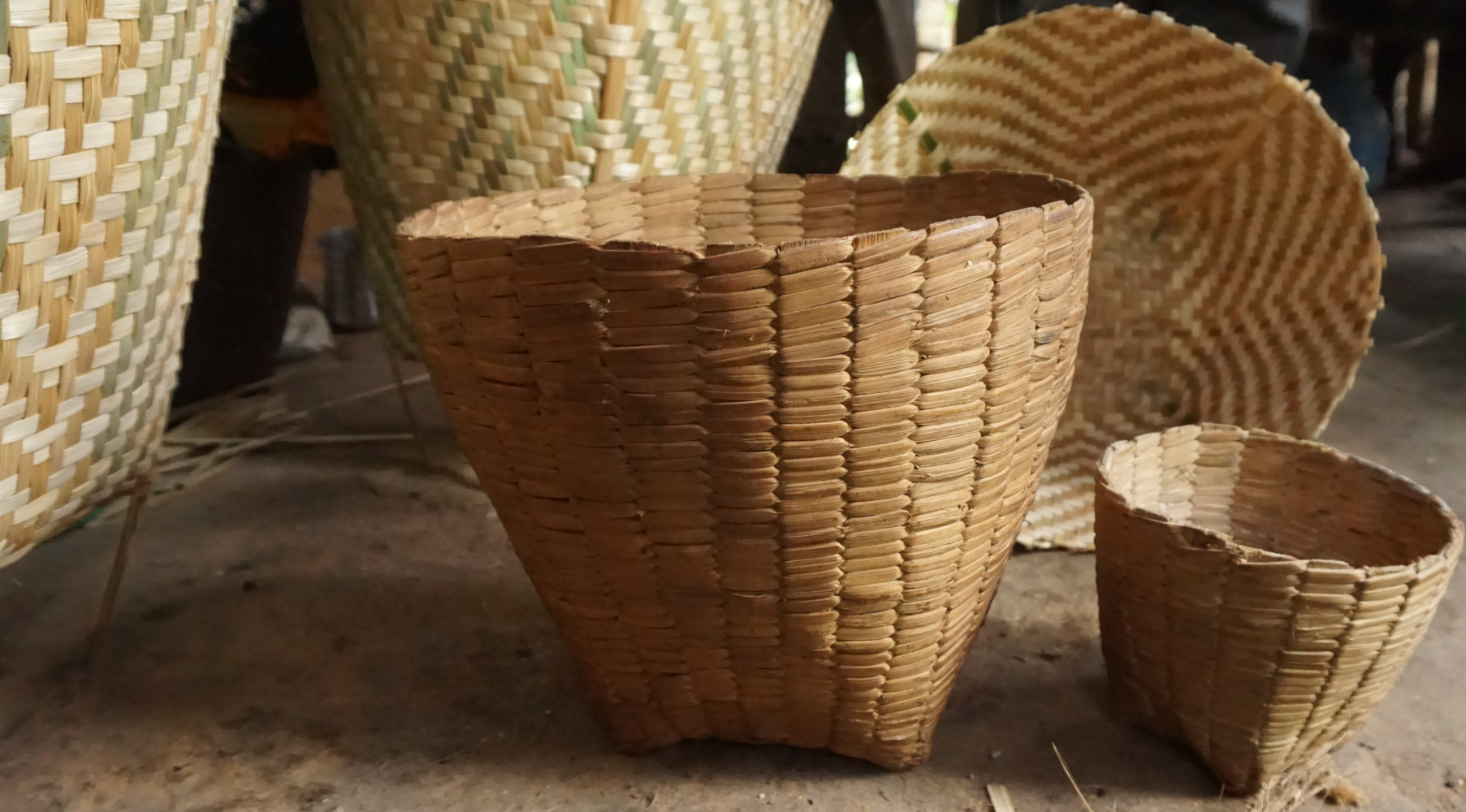
The Chepang ethnic people were facing landless-ness after their settlements were burned down by the Chitwan National Park authorities near Madi,Nepal in 2020. Chepang are originally foragers and more recently subsistence farmers, who depend on the jungle for all their needs. They are traditionally masterful weavers owing to the harsh geographic and economic realities of their settlements, often occupying hinterlands or cliffs. Abari’s research on their basketry skill revealed that they even had particular baskets woven to store liquids such as cooking fat (Chiuri) and home brewed alcohol (Raksi)!
Traditionally, basketry had been a means of barter with other agricultural communities for the Chepang. And more recently, it became a means of economic gain through linkage to local town markets where their baskets are used for religious rituals. Due to the lack of a consistent stream of income, talented and highly skilled weavers have had to take up menial labor like road construction work or other local projects due to their economic status. They tend to stop weaving and some even migrate for work, leaving them completely disconnected from the material, the craft and the culture.
Working with the Chepang community to develop new products
The authors (who are also architects) have been designing and constructing houses using bamboo grown near this community. They have set up a bamboo farm and learning centre to share knowledge and host workshops with bamboo farmers and weavers acting as a bridge between them and the market. Not only do they use treated bamboo as a structural element but also use bamboo weaving in their ceilings,flooring and partitions.They have also pioneered the use of treated bamboo in furniture and product design.
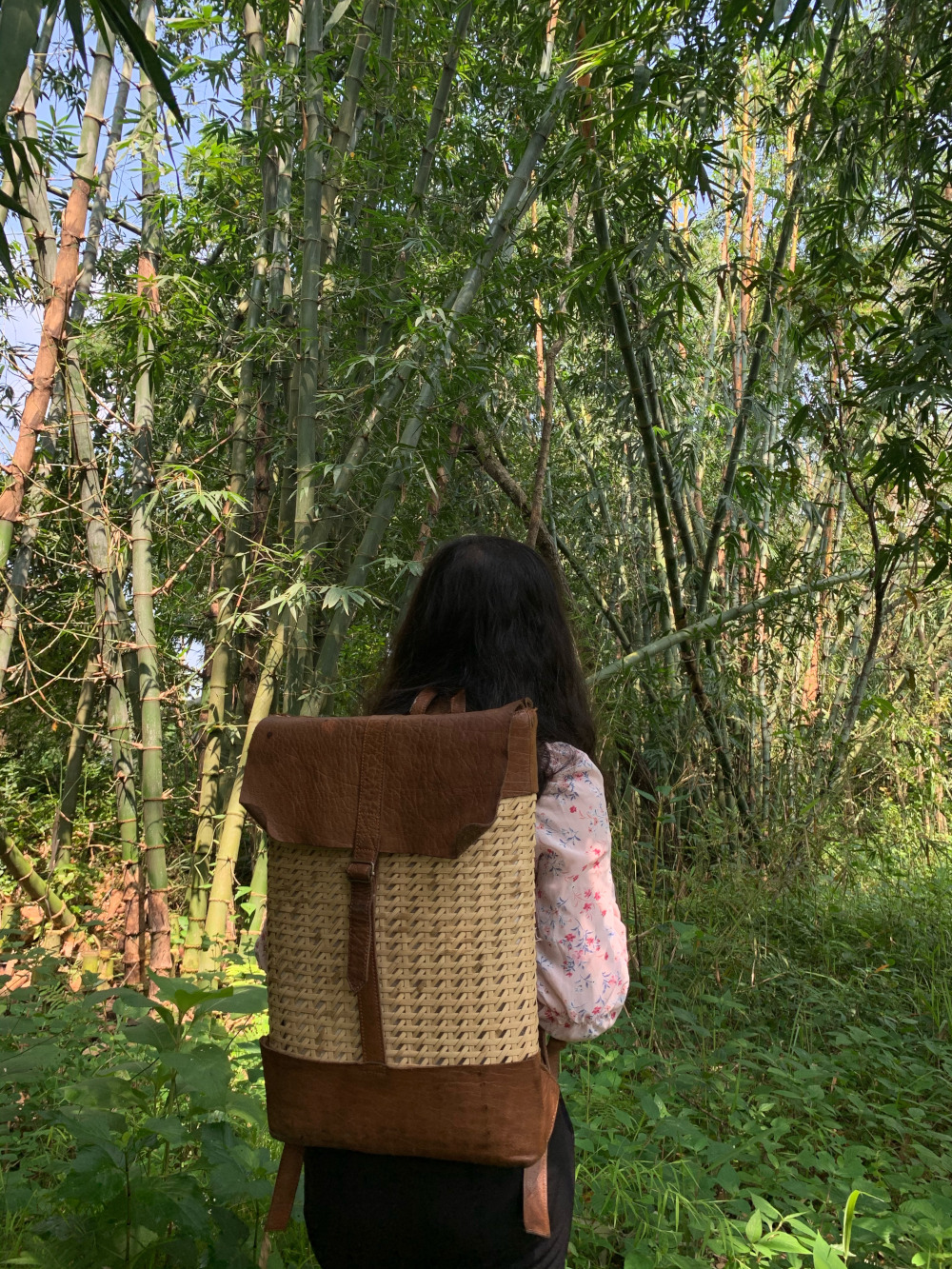
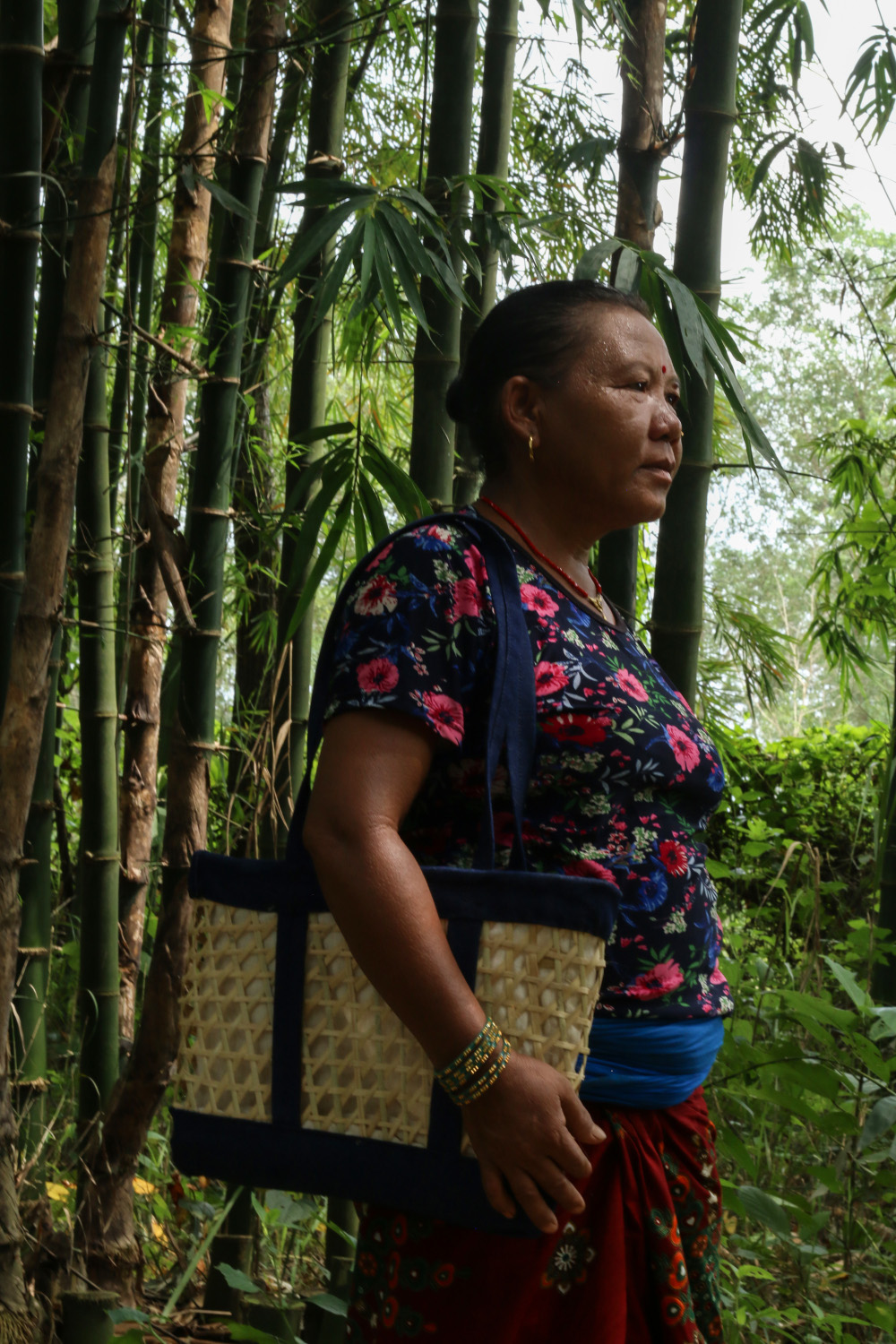
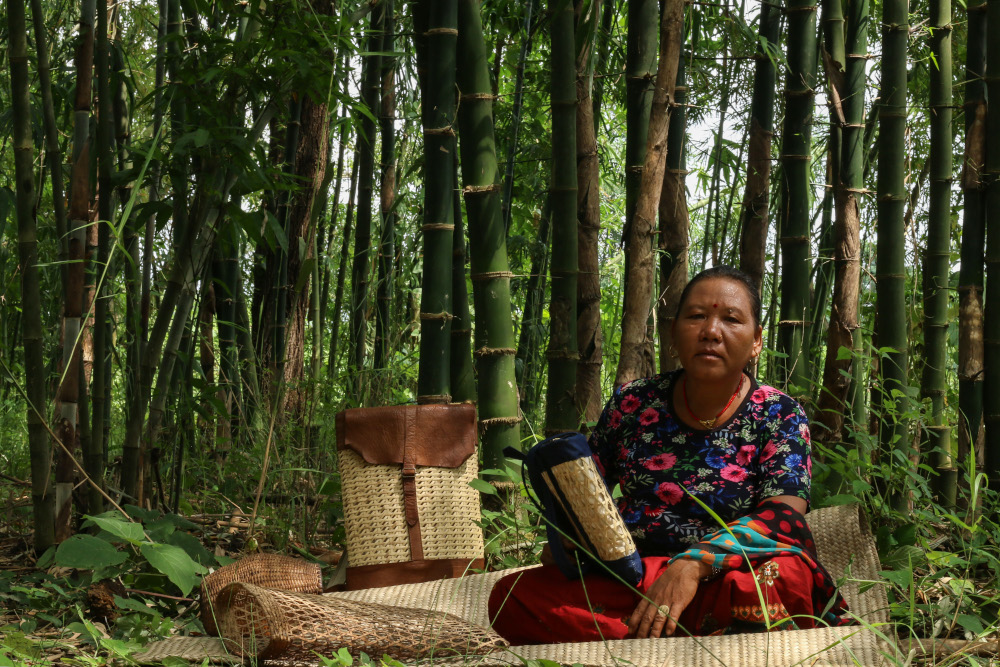
When the Chepang were displaced and moved close to this farm, the collaboration of their basketry skills with Abari’s design skills have led to a series of interesting products and further research and development of bamboo weaving in the community. The bamboo and leather backpack in particular and the bamboo and jean tote bag received a lot of admiration.
The products became a means to share the previously undocumented narrative of their displacement and also bring attention to their craft. Not only did it provide a link to an international market, it helped create an alternative income stream for the weavers. Older weavers came in to demonstrate and participate with aspiring younger weavers. Inter-generational knowledge transfer and training-of-trainers model was central to these workshops in Madi. The project took a halt when seasoned and senior weaver Sancholal passed on and the community was focused on settling in and re-creating farming systems in their new land.
The collaboration will be developed further this year to produce unique woven products for an international art exhibition, with select weavers who continue to farm, forage and collaborate with us by weaving part-time from their homes.