JUGAR Y CONTAR HISTORIAS EN LENGUAJE PROPIO
PLAYING IN YOUR OWN LANGUAGE
Ms Gloria Bejarano-Castro
FUNDACION CASA TALLER / PANAMA
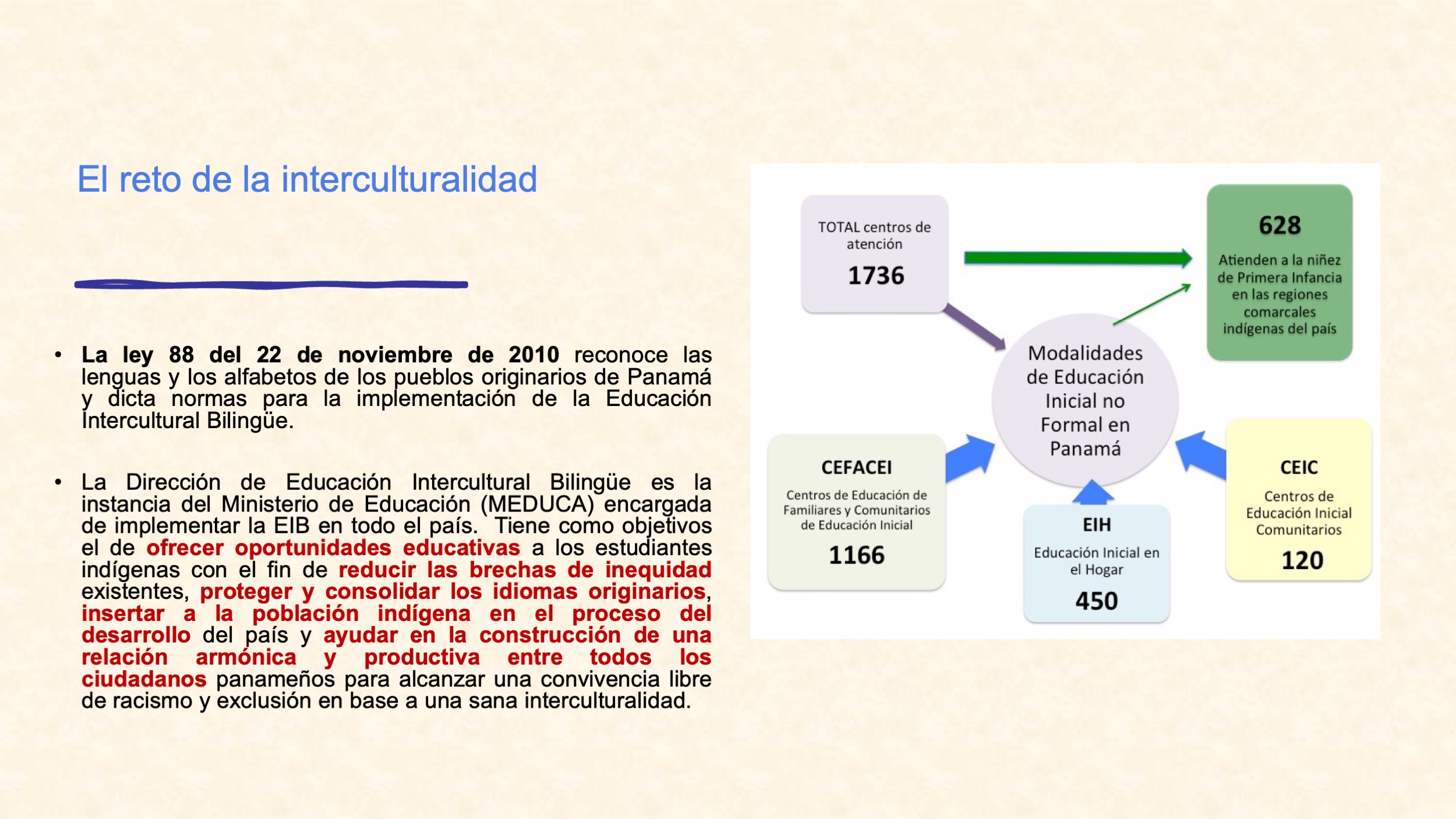
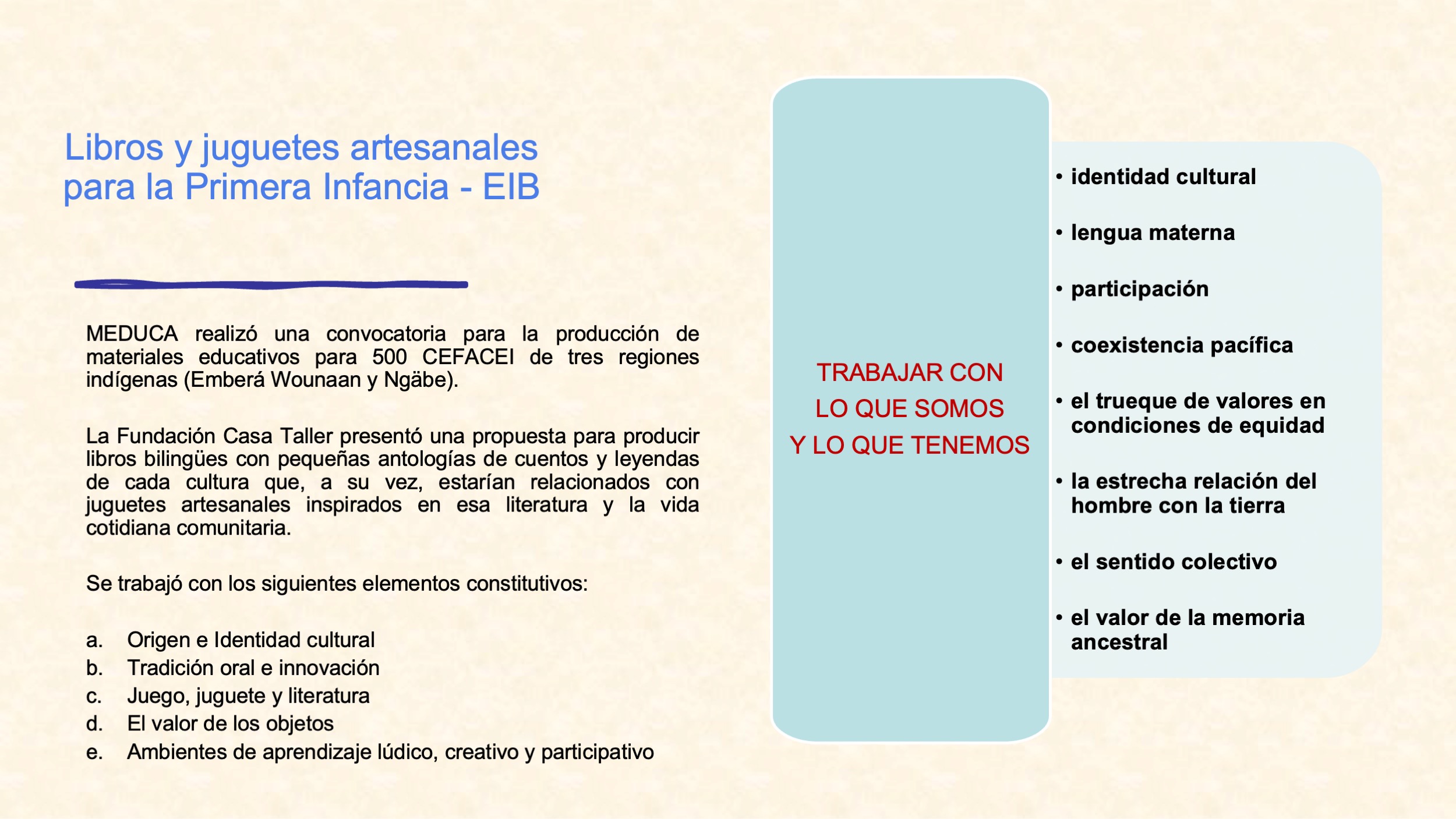
In 2005, the Panamanian Ministry of Education launched a call for the production of culturally relevant educational materials for 500 Family and Community Centers for Early Childhood Education (CEFACEI) in three Indigenous regions (Emberá, Wounaan, and Ngäbe).
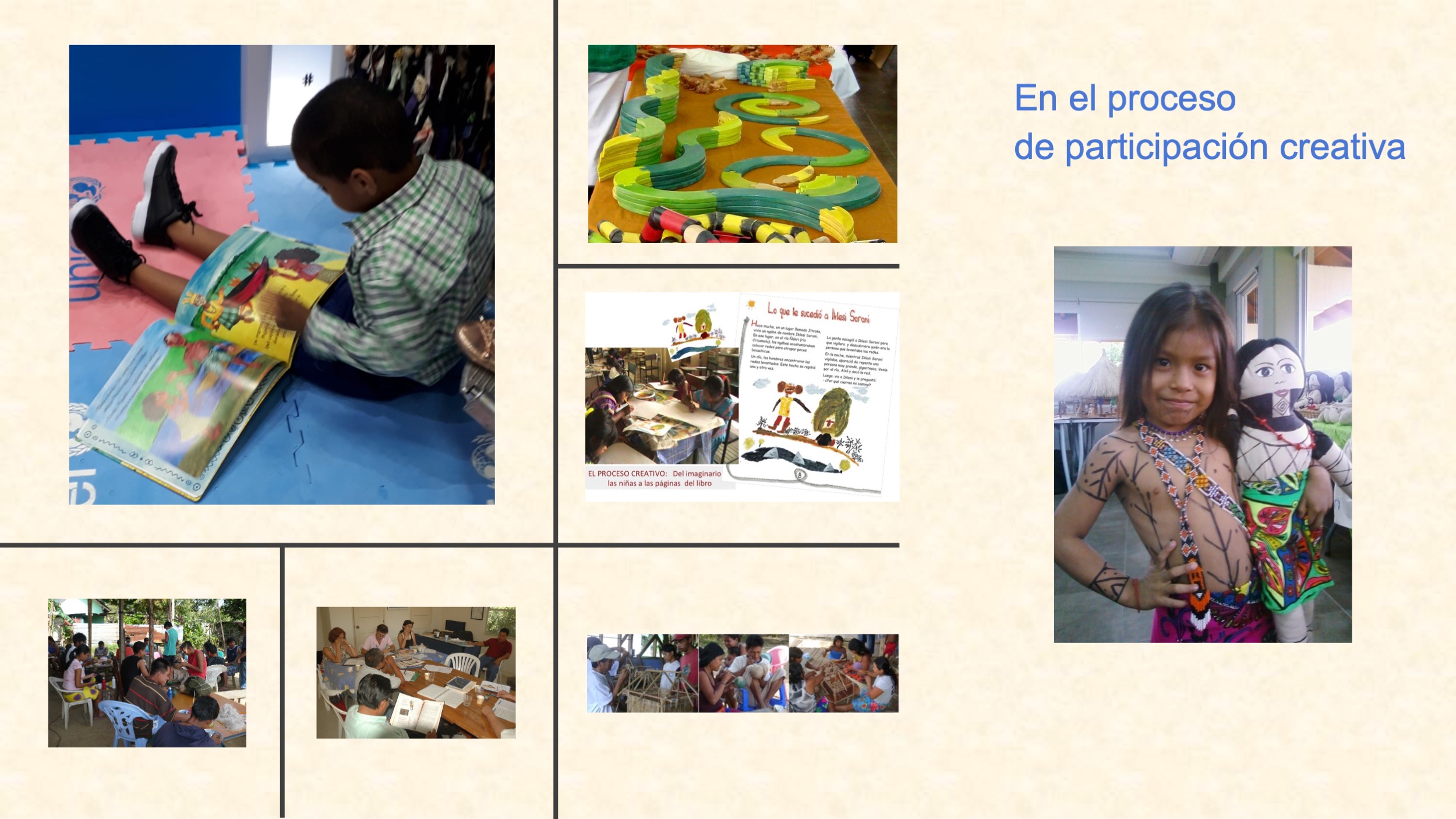
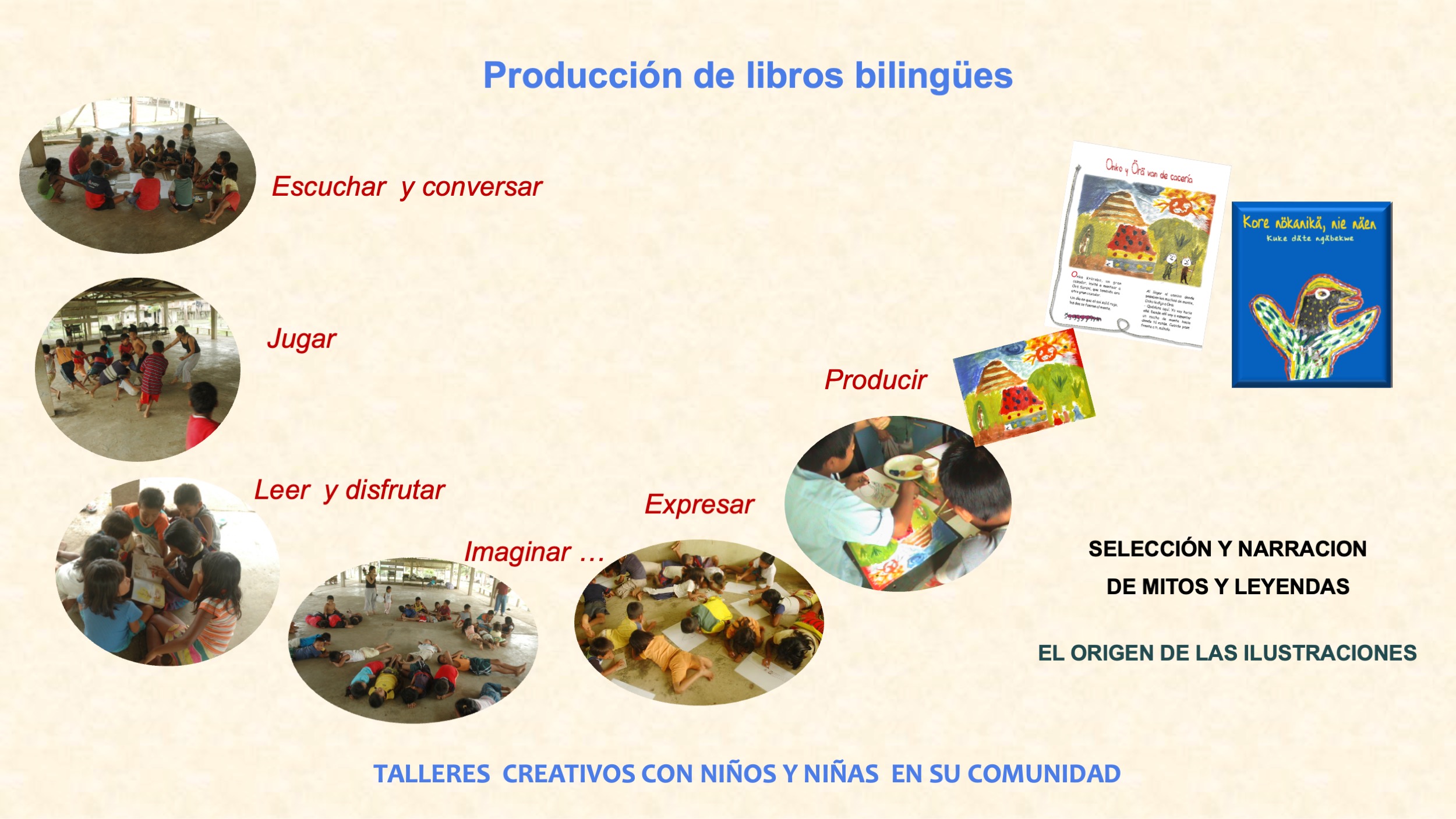
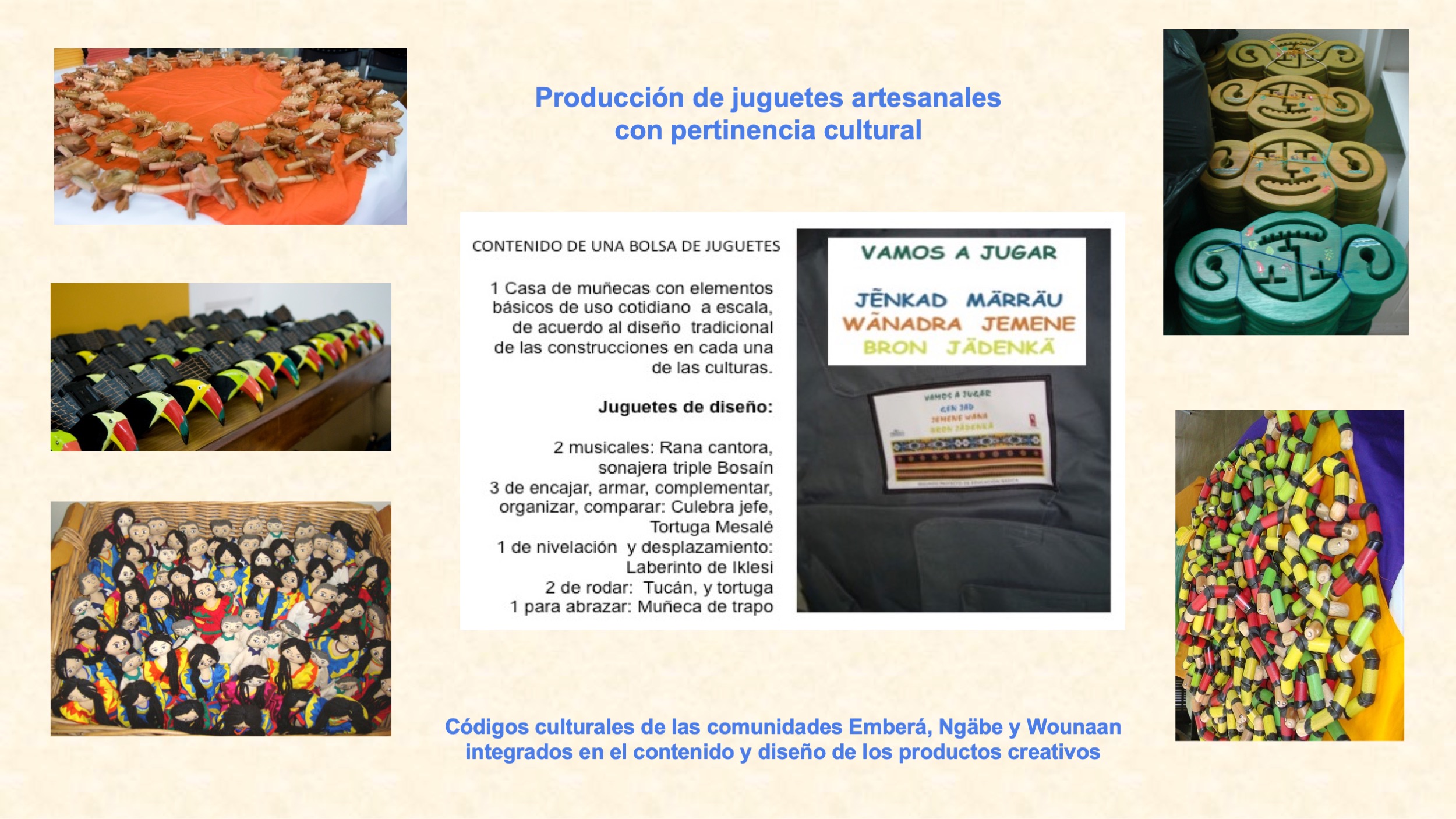
We presented a unique proposal to produce small bilingual anthologies of stories and legends from each culture, which would be connected to handmade toys inspired by that literature and the daily life and experiences of the children.
A brief overview of the history of Intercultural Bilingual Education and its situation in Panama will help contextualize the importance of the task, especially when we consider the prevailing vertical and homogenizing school culture that has historically dominated our education system. This reality demanded great care in developing the new proposal to avoid merely “adapting” existing programs.
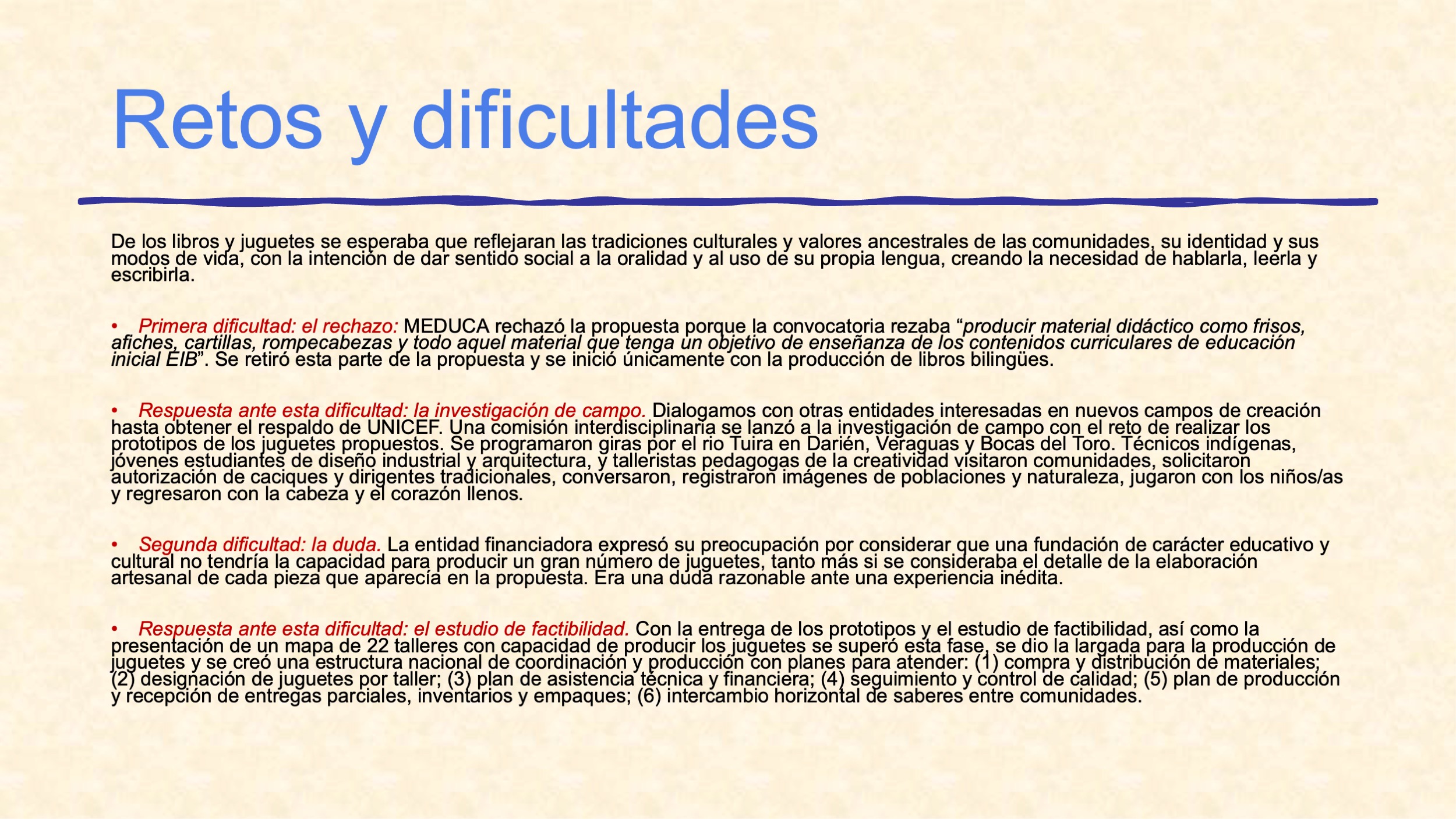
The books and toys were expected to reflect cultural traditions, ancestral values, identity, and ways of life, with the aim of giving social meaning to oral traditions told in their own language, creating the need to speak, read, and write in it.
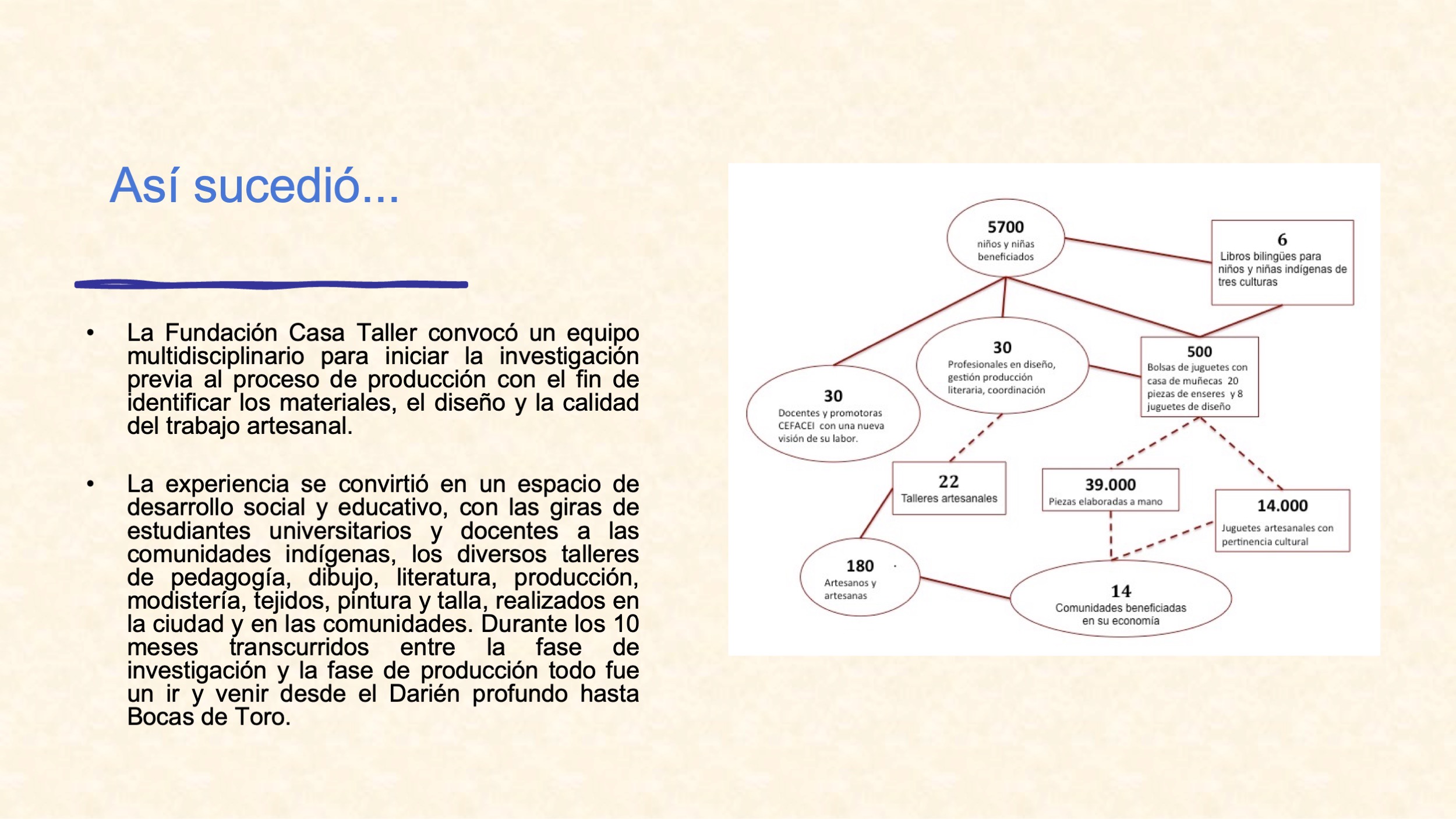
The experience became a space for fostering community and sharing knowledge, with university students and teachers visiting Indigenous communities, and various workshops on pedagogy, drawing, literature, production, sewing, weaving, painting and carving, held both in the city and in the communities.
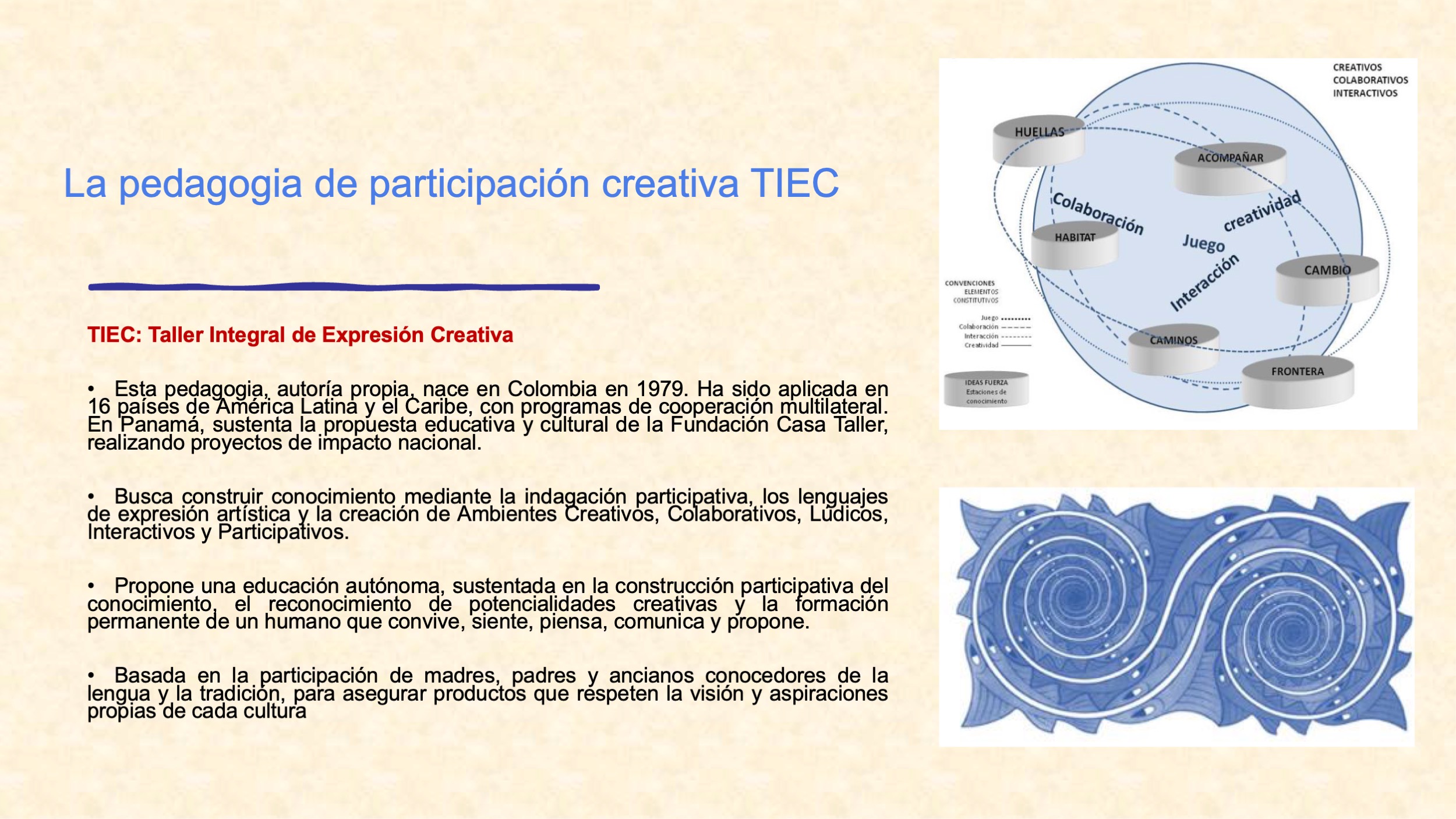
Educators, researchers, Indigenous artisans, carpenters, seamstresses, painters, writers, theater artists, visual artists, designers, linguists, anthropologists worked together, demonstrating that knowledge is built through socio-cultural interactions, where everyone has much to give and much to learn.